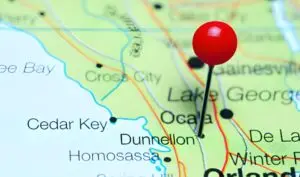
Bermuda has a way of doing this to people. You’re looking at a map, you spot that tiny pink island floating in the Atlantic, and it seems like it should be a weekend sail from the Florida coast. The water is turquoise in the photos, the island is small, and the distances look manageable. Then you actually start calculating, and the Atlantic Ocean reminds you that it doesn’t care about your weekend plans.
So, how far is Bermuda from Florida by boat? And what does that crossing actually involve? This guide covers the real nautical miles, the honest sailing times, what conditions you’ll face on the water, and how the boat journey compares to getting there by plane.
First — Where Exactly Is Bermuda?
This is the question that surprises most people who haven’t looked closely at a map. Bermuda is not in the Caribbean. It’s not near the Bahamas. It’s not even particularly close to Florida in any meaningful, practical sense.
Bermuda sits alone in the North Atlantic Ocean, roughly 1,000 miles east of the United States mainland. Its nearest neighbor on the American coast is actually Cape Hatteras, North Carolina — not Florida. From the Florida coast, Bermuda is further away still, sitting well to the northeast out in the open ocean with nothing else around it for hundreds of miles in any direction.
That sense of isolation is part of what makes Bermuda so distinctive as a destination. But it also means that getting there by water is a serious offshore passage, not a casual coastal hop.
| ~1,070 Nautical miles from Miami to Bermuda |
| ~1,000 Nautical miles from Cape Canaveral to Bermuda |
| 4–7 Days at sea for most sailboats |
| 2 hrs By direct flight from the US |
The Nautical Miles: Florida to Bermuda by Boat
When sailors talk about distance on the water, they use nautical miles — each one equal to about 1.15 standard miles. It’s a measurement that matters because it affects how long you’re at sea, how much fuel or food you need, and how much weather you’re exposed to.
Here’s the honest picture of the distance from Florida to Bermuda by boat, measured from several common Florida departure points:
| Florida Departure Point | Destination | Nautical Miles (approx.) | Standard Miles (approx.) |
|---|---|---|---|
| Miami, FL | Hamilton, Bermuda | ~1,070 nm | ~1,230 miles |
| Fort Lauderdale, FL | // | ~1,060 nm | ~1,220 miles |
| Palm Beach, FL | // | ~1,040 nm | ~1,197 miles |
| Cape Canaveral / Cocoa Beach, FL | // | ~1,000 nm | ~1,151 miles |
| Jacksonville, FL | // | ~960 nm | ~1,105 miles |
Notice something? The further north you go along Florida’s coast, the closer you get to Bermuda. Jacksonville is genuinely the shortest Florida departure point for this passage — though it’s still nearly 1,000 nautical miles of open ocean. No shortcut changes the fundamental nature of this crossing.
Related Post: How Far Is Cuba from the Tip of Florida?
How Long Does the Crossing Take?
This is where the distance becomes real in a way that simple miles don’t quite capture. Sailing from Florida to Bermuda takes most boats. Under normal conditions, it is somewhere between 3 and 7 days at sea. That’s not a typo. Here’s why the range is so wide:
| Vessel Type | Typical Speed | Estimated Crossing Time |
|---|---|---|
| Racing sailboat (offshore) | 10–15 knots | 3–4 days |
| Performance cruising sailboat | 7–9 knots | 4–5 days |
| Average bluewater cruising sailboat | 5–7 knots | 5–7 days |
| Motor yacht (fast) | 18–25 knots | 2–3 days (with fuel stops or large tanks) |
| Large power cruiser | 10–14 knots | 3–4 days |
Speed on a sailboat isn’t constant the way it is in a car. Wind conditions, sea state, currents, and the need to occasionally heave-to or slow down in rough weather all affect your actual passage time. Experienced offshore sailors build in extra days as a buffer — and rarely regret doing so.
Also Read: How Far Is It from Virginia to Florida?
What the Crossing Is Actually Like
Numbers tell you the distance. They don’t tell you what it feels like to be halfway between Florida and Bermuda with nothing but open ocean in every direction. Here’s an honest picture of what the Florida to Bermuda ocean crossing involves for sailors who make this passage.
The Gulf Stream: Your First Big Decision
The Gulf Stream is a powerful ocean current that runs northeast along Florida’s coast at 2 to 4 knots. For the Bermuda passage, it’s both an asset and a hazard. Cross it strategically and it adds free speed to your passage — sometimes as much as 40 to 60 miles of daily advantage.
But when wind opposes the current, particularly north or northeast winds against the northward-flowing Stream, it produces some of the most uncomfortable and dangerous sea conditions on the East Coast. Short, steep, breaking waves that can overwhelm smaller vessels quickly.
The Sargasso Sea
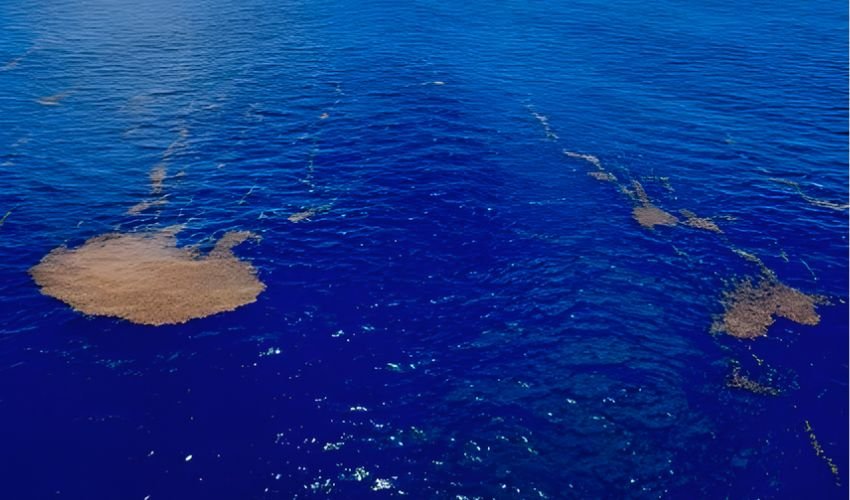
Once you’re through the Gulf Stream and east of it, you enter the Sargasso Sea— the calm, warm, and often windless ocean zone that surrounds Bermuda from the south and west. For sailors, this section can be the most frustrating part of the crossing.
Light and variable winds are common, and many passages involve a day or two of motoring through glassy, golden-brown water thick with floating sargassum seaweed. The scenery is strange and beautiful. The sailing can be tedious.
Weather Windows Are Everything
The best time to make the Bermuda passage from Florida is May through early June, before the Atlantic hurricane season properly kicks in. The spring weather patterns bring more reliable southwesterly winds that push you northeast toward Bermuda, and the window between winter storms and hurricane season is the sweet spot that offshore sailors aim for.
Attempting this crossing from July through October significantly raises your exposure to tropical weather systems. November through March brings cold fronts, strong north winds, and the kind of North Atlantic conditions that belong to serious bluewater sailors only.
Night Sailing and Watch Schedules
A 5 to 7-day passage means multiple nights at sea. You’ll need at least two people aboard capable of standing watch, ideally three or four for a comfortable rotation. Typical offshore watch schedules run three-hour or four-hour shifts, with everyone sleeping in turns.
Night sailing on this passage can be extraordinary — the bioluminescence in the warm Gulf Stream water, the stars away from any light pollution, the rhythm of the boat.
Best Read: Best Things to Do in NYC for Every Traveler
Best Florida Departure Ports for the Bermuda Passage
Not every Florida marina is equally well-suited as a jumping-off point for Bermuda. Here’s what each major departure area offers:
| Departure Port | Distance to Bermuda | Worth Knowing |
|---|---|---|
| Fort Lauderdale | ~1,060 nm | The most popular choice. Excellent provisioning, fuel, marine services, and a well-established offshore sailing community. Home to many delivery captains and experienced passage crews. |
| Miami | ~1,070 nm | Similar to Fort Lauderdale, with excellent amenities. Biscayne Bay gives good shelter for final checks before departure. |
| Palm Beach / West Palm Beach | ~1,040 nm | Slightly shorter crossing. Strong sailing community. Lake Worth Inlet is a reliable departure point. |
| Cape Canaveral / Cocoa Beach | ~1,000 nm | The shortest Florida-to-Bermuda route. Less commercially active than South Florida, but a legitimate option with a good inlet. |
| Jacksonville | ~960 nm | Geographically closest to Bermuda. Less convenient for provisioning a major offshore passage than South Florida. |
Most experienced Bermuda sailors choose Fort Lauderdale or Palm Beach, not necessarily because they’re the closest points, but because the marine infrastructure — fuel docks, chandleries, experienced riggers, and fellow offshore cruisers — is the best in Florida for preparing a serious offshore passage.
Before departure, it’s worth using a trusted travel booking platform to sort out your Bermuda arrival arrangements — marina reservations on the island fill up during peak sailing season.
Boat vs. Plane: How Much Time Does It Take?
Most people visiting Bermuda fly there. And that’s worth acknowledging directly when you’re thinking about the boat trip from Florida to Bermuda, because the comparison illuminates what you’re actually choosing between.
| By Boat (Sailboat) | By Plane | |
|---|---|---|
| Distance | ~1,000–1,070 nautical miles | ~1,070 air miles from Miami |
| Travel Time | 4–7 days at sea | ~2 hours flight time |
| Cost | Fuel, provisions, marina fees — significant | Flights from Florida range $250–$600+ RT |
| Experience | Offshore ocean passage, genuine adventure | Standard point-to-point air travel |
| Requirements | Offshore-capable vessel, experienced crew, proper equipment | A valid passport |
| Risk | Real offshore sailing risks if unprepared | Standard commercial aviation safety |
Flying to Bermuda from Florida is practical, affordable, and takes about two hours. Direct flights operate from Miami, Fort Lauderdale, and Orlando into L.F. Wade International Airport. If your goal is simply to get to Bermuda, then flying is the sensible, comfortable choice. You can find flight discount codes for Bermuda routes that can make the ticket meaningfully cheaper, especially if you’re flexible on travel dates.
But if the crossing itself is what you’re after, then the boat passage is one of the great offshore experiences available to sailors on the East Coast. Those are two completely different trips, and neither is wrong.
Can You Take a Cruise to Bermuda from Florida?
This is one of the most common questions about reaching Bermuda by sea, and the answer is: yes, but not directly from Florida in the way most people picture it.
Bermuda cruises are popular, but they predominantly depart from the Northeast — New York, New Jersey, Baltimore, and Boston — because those ports are significantly closer to the island. The is about 1,070 miles, roughly the same as Miami to Bermuda, but the transit routes favor the Northeast departure ports.
Some cruise itineraries include Bermuda as part of a broader Caribbean or Atlantic route and may originate from Florida, but a dedicated round-trip Bermuda cruise departing from Miami or Fort Lauderdale is not a standard offering on most major cruise lines. The transit time from South Florida would eat too much of the cruise’s schedule.
Practical Tips for Sailors Planning the Florida–Bermuda Passage
If you’re a sailor genuinely planning to make this crossing, here’s what experienced offshore sailors consistently recommend:
Wait for the Right Weather Window
Don’t let impatience or a fixed schedule push you out of the inlet in bad conditions. The Florida–Bermuda passage has no bailout ports. Monitor weather models for at least five to seven days before departure, and look for a high-pressure system that will give you stable southwesterly winds for the crossing. The best sailing window for Florida to Bermuda is typically May through early June.
Respect the Gulf Stream
Plan your Gulf Stream crossing with care. Avoid north or northeast winds against the current. Before you go, you must check the current NOAA data on the Gulf Stream position. Crossing in favorable conditions can give you a significant push, while opposing winds can be genuinely dangerous for smaller vessels.
Provision and Fuel Generously
There is nothing between Florida and Bermuda. Carry more water, food, and fuel than your best-case passage estimate requires. Assume your crossing takes a day or two longer than planned, because sometimes it does.
Register with Bermuda and US Customs
Bermuda has specific entry requirements for arriving vessels. You’ll need to clear customs and immigration upon arrival in St. George’s or Hamilton. Carry valid passports for all crew, your vessel documentation, and be aware that Bermuda has strict rules about what you can bring ashore so make sure to remember them.
Tell Someone Your Float Plan
Leave a detailed float plan — departure point, destination, vessel description, crew list, expected arrival date — with someone ashore. Contact the US Coast Guard Sector Jacksonville’s watch before departure. If you have an EPIRB, make sure it’s properly registered.
Once you’re planning the Bermuda end of your trip, hotel and accommodation options on the island can serve as a useful fallback reference. If you’re leaving crew behind who’ll fly home rather than sail back, having somewhere booked makes the logistics easier. And for the broader Bermuda destination picture or knowing what to do once you’ve arrived, TravelTweaks’ destination guides offer a good starting point for planning time ashore.
Frequently Asked Questions – Florida to Bermuda
Q. Is the Florida to Bermuda passage dangerous?
A. It can be challenging and risky for inexperienced sailors due to open-ocean conditions, weather, and the Gulf Stream, but is manageable with a sound boat, good planning, and experience.
Q. How long does it take to sail from Florida to Bermuda?
A. On a typical cruising sailboat, the trip usually takes about 3–7 days, depending on route, weather, and boat speed.
Q. Can you see Bermuda from Florida?
A. No, you cannot see Bermuda from Florida; they are hundreds of miles apart across the open Atlantic.
Q. What’s the best time of year to sail from Florida to Bermuda?
A. Late spring to early summer is generally preferred, avoiding winter storms and the peak Atlantic hurricane season.
Q. How far is Bermuda from the Bahamas by boat?
A. The distance is roughly 780–800 nautical miles, depending on your exact departure and arrival points.
Final Words
Bermuda is roughly 1,000 to 1,070 nautical miles from Florida’s coast, a distance that most sailboats take four to seven days to complete. It is not a coastal hop, a weekend sail, or a trip to take lightly. But for sailors who are properly prepared, experienced, and patient enough to wait for the right weather window, it is one of the classic offshore passages on the East Coast — and arriving in Bermuda after days at sea is an experience that stays with you.