
What Is Downtown Paris? Understanding the City’s Actual Center
Downtown Paris refers to the historic core spanning the 1st, 4th, 6th, and 8th arrondissements, the compact center holding the Louvre, Notre Dame, the Champs Élysées, and the banks of the Seine. Paris has no single official downtown district the way many American cities do. Instead, the city spreads outward from that historic core through 20 numbered arrondissements arranged in a spiral, and the lower numbered districts function as the practical center most travelers mean when they search for downtown Paris. This same core answers a related question travelers often search in Spanish, cuál es la capital de Francia, since Paris holds that title and its downtown district sits at the exact geographic heart of the capital.
Why Paris Doesn’t Have One Official Downtown
Paris grew outward from the Île de la Cité, the small island in the Seine where the Parisii tribe first settled more than two thousand years ago. Instead of building a single business district, the city organizes itself into 20 arrondissements, numbered 1 through 20, spiraling outward from that original center. The lower numbered arrondissements, especially the 1st through 8th, hold the highest concentration of major landmarks, government buildings, and historic architecture, which explains why they collectively read as downtown to most travelers even without an official label.
The Area Most People Mean by Downtown Paris
When travelers search for downtown Paris, they usually picture:
- The 1st arrondissement, home to the Louvre and the Tuileries Garden
- The 4th arrondissement, covering Notre Dame, Île Saint Louis, and part of Le Marais
- The 8th arrondissement, home to the Champs Élysées and the Arc de Triomphe
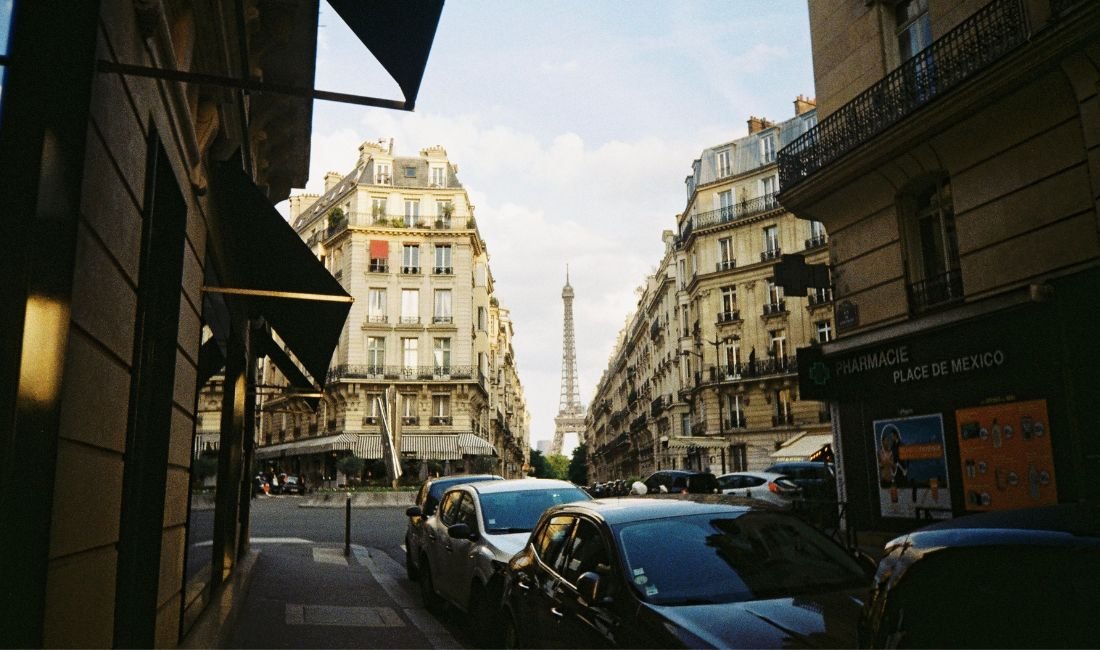
- The 6th and 7th arrondissements, covering Saint Germain des Prés and the Eiffel Tower area
Together, these districts form the compact, walkable center most first time visitors stick to during a short trip.
Getting Around Downtown Paris
The central arrondissements sit close enough together that walking between major sights works well for most travelers. For longer distances, the metro remains the fastest option, and lines 1 and 4 cut straight through the historic center. The city’s transit authority maintains an interactive route map covering every line, useful for planning exact connections.
Best Neighborhoods Within Downtown Paris
Le Marais
Historic and walkable, blending medieval streets with trendy shops and cafés.
Saint Germain des Prés
Known for literary cafés and elegant, quieter streets on the Left Bank.
Île de la Cité and Île Saint Louis
The literal geographic heart of the city, home to Notre Dame and some of its oldest architecture.
For a fuller breakdown of the city’s central districts and how they connect to major sights, an official district by district guide to the city center covers each neighborhood in more detail.
Where to Stay for Easy Access to Downtown Paris
Staying within or near the central arrondissements cuts down significantly on daily transit time. Our hotel planning guide breaks down how to weigh location against budget when booking near the city center.
If you’re mapping out a full trip rather than just the downtown core, our Paris itinerary guide covers how to pace your days across both the center and the surrounding districts.
Downtown Paris by Season and Traveller Type
Weather shapes how much time you’ll realistically spend walking between downtown landmarks. Our breakdown of Paris snow and winter conditions covers what to expect if your trip falls in the colder months.
Traveling with kids changes the pacing too, since the dense downtown core can wear out younger travelers faster than expected. Our guide to things to do with kids in Paris covers family friendly stops within the central districts.
If a specific event anchors your visit, our guide to Paris during its indoor winter season covers how downtown sightseeing fits around a scheduled day.
Cultural Weight of the Historic Center
The stretch of riverbank running through downtown Paris, including the areas around Notre Dame and the Louvre, carries a UNESCO World Heritage designation recognizing the architectural and historic significance of the Seine’s banks through the city’s core.
FAQs About Downtown Paris
Does Paris have an official downtown district?
No. Paris organizes itself into 20 arrondissements rather than a single downtown, though the 1st, 4th, 6th, and 8th collectively function as the city’s practical center.
What arrondissement is considered downtown Paris?
Most travelers mean the 1st, 4th, 6th, 7th, and 8th arrondissements when they refer to downtown Paris, since these hold the majority of major landmarks.
Is it better to stay downtown in Paris?
Staying central cuts down on transit time and puts you within walking distance of most major sights, though it typically costs more than staying farther out.
How do you get around downtown Paris?
Walking works well between nearby landmarks, while the metro, particularly lines 1 and 4, connects the wider downtown area quickly.
What’s the difference between downtown Paris and Paris as a whole?
Downtown Paris refers informally to the historic central arrondissements, while greater Paris includes all 20 districts plus the wider metropolitan area beyond the city limits.
Is downtown Paris walkable?
Yes. The central arrondissements sit compact enough that most major sights fall within a comfortable walking distance of each other.
What landmarks are in downtown Paris?
The Louvre, Notre Dame, the Champs Élysées, the Arc de Triomphe, and the Eiffel Tower area all fall within what most travelers consider downtown Paris.
Is downtown Paris safe for tourists?
The central districts draw heavy foot traffic and a visible police presence, though standard precautions around pickpocketing still apply.
Final Thought
Downtown Paris isn’t an official designation, it’s a practical shorthand for the historic central arrondissements where most major landmarks, museums, and iconic streets sit close together. Understanding that structure makes it far easier to plan where to stay, how to get around, and how much ground you can realistically cover on foot during a visit.