A road trip can look simple when you only check the distance and estimated drive time. In reality, the route has to account for fuel, meals, rest stops, traffic, weather, vehicle condition and the time you want to arrive. Car travel on PaxTravelTweaks is about planning those parts together instead of treating the drive as one long line between two destinations.
The aim is not to make every road trip complicated. It is to answer the decisions that can change how the journey works before the car leaves the driveway. The broader Travel Tweaks approach follows the same principle: plan around the decisions that can change the trip rather than collecting disconnected tips.
Car travel on PaxTravelTweaks is a road-trip planning approach that brings route choice, vehicle readiness, realistic travel time, costs, stops and backup planning into one trip plan.
How the PaxTravelTweaks Road-Trip Method Works
A useful road-trip plan can be built around six connected decisions: route, car, time, cost, stops and backup.
| Stage | Main question |
|---|---|
| Route | Which road makes the most sense for this trip? |
| Car | Is the vehicle ready for the distance and conditions? |
| Time | How long will the whole travel day really take? |
| Cost | What will the drive cost beyond the fuel estimate? |
| Stops | Where should fuel, food, rest and overnight breaks happen? |
| Backup | What changes if traffic, weather or the original route becomes a problem? |
The same method works whether someone searches for car travel on PaxTravelTweaks or car travel with PaxTravelTweaks. The purpose is to make a long drive easier to plan before small problems begin affecting the schedule.
For trips where geography is the bigger challenge, the Map Guides TTweakMaps by TravelTweaks method can help you plot destinations and stops before deciding how the driving day should fit together.
Step 1: Decide What Kind of Drive You Actually Want
The fastest route is not automatically the best route.
Before choosing roads, decide what matters most on this trip.
For one driver, arriving as early as possible may be the priority. Another traveler may willingly add an hour for a more scenic road, an interesting town or an easier overnight stop.
Prioritize lower travel time, fewer detours and predictable services along the route.
Allow extra time for viewpoints, towns, scenic roads or attractions that justify leaving the direct route.
Large-city traffic, mountain roads or night driving may change which route feels easier.
Children, older passengers and pets may require more frequent or longer stops.
Ask whether you want to avoid toll roads, whether there are places you want to visit along the way and whether the route has enough fuel, food and rest options.
These questions can change which road makes sense.
Fastest Route vs Better Road-Trip Route
Usually shorter in distance and time, with fewer planned detours and more focus on reaching the destination efficiently.
May add distance or time but can include scenic roads, towns, attractions or a more enjoyable overnight stop.
| Check | Fastest route | Alternative road-trip route |
|---|---|---|
| Driving time | Usually lower | Often higher |
| Distance | Usually shorter | May add miles |
| Tolls | May include more | May offer alternatives |
| Scenic stops | Often fewer | May offer more |
| Services | Often easier to find | Depends on the road |
| Best choice when | Arrival time matters | The journey matters too |
Do not pick an alternative route only because it looks more interesting on a map. Check how much time and distance it adds first.
A 20-minute detour can be easy to absorb. A two-hour detour changes the whole day.
For a real example of this decision, the Virginia to Florida driving guide compares the direct I-95 route with slower alternatives such as US-17, US-301 and US-1.
Step 2: Check the Car Before a Long Drive
Road-trip planning starts before navigation.
A route that looks perfect will not help much if the vehicle has an unresolved problem before departure.
The exact maintenance needs depend on the vehicle, its age, mileage and current condition, but a basic pre-trip check can help identify problems before they become roadside problems.
Vehicle Readiness Check
| Check | What to look at | Why it matters |
|---|---|---|
| Tires | Pressure, visible damage and tread condition | Tires affect handling and roadside reliability |
| Engine oil | Level and service needs | Long drives put continuous demand on the engine |
| Coolant | Correct level and known leaks | Overheating can stop a trip quickly |
| Washer fluid | Enough for the journey | Visibility can change with weather and road dirt |
| Lights | Headlights, brake lights and indicators | Other drivers need to see you clearly |
| Battery | Condition and known starting problems | Weak batteries can fail away from home |
| Warning lights | Unresolved dashboard warnings | Investigate problems before a long trip |
| Spare tire and tools | Present and usable where applicable | Useful when a tire problem occurs |
This does not mean every traveler needs to become a mechanic.
If something already feels wrong with the car, a long road trip is not the right time to ignore it.
Step 3: Turn Navigation Time Into a Real Travel-Day Estimate
One of the easiest road-trip mistakes is treating the navigation estimate as the length of the travel day.
If a map says 6 hours 30 minutes, that usually does not mean you will leave at 8:00 a.m. and arrive exactly at 2:30 p.m.
The real day may include fuel, meals, bathroom breaks, coffee stops, traffic, parking, scenic stops, roadworks, passenger needs and unexpected delays.
You do not need to predict every minute.
The point is to stop treating uninterrupted driving time as the complete schedule.
A Simple Example
The planned travel day is already around 7 hours 35 minutes, before any major traffic delay.
This one adjustment can make hotel check-in times, dinner reservations and evening plans much more realistic.
If you want to compare mileage, estimated drive time, fuel cost and possible stopping points before building this schedule, the Travelmath Trip Calculator guide walks through that process step by step.
Step 4: Calculate the Real Cost of the Road Trip
Fuel is usually the first cost drivers think about.
It is not always the only one.
Not every category applies to every drive.
A same-day trip may have no accommodation cost. A route through several cities may involve expensive parking. A rural route may have fewer tolls but require more fuel.
Estimate Fuel Cost
Suppose a route is 420 miles, your vehicle averages 28 MPG, and fuel costs $3.40 per gallon.
420 ÷ 28 = 15 gallons
15 × $3.40 = $51
So the rough fuel estimate is $51.
That is a planning figure rather than a guaranteed final cost. Traffic, speed, weather, vehicle load and actual fuel prices can change consumption.
Do Not Compare Routes Using Fuel Alone
Suppose Route A costs $8 less in fuel but adds expensive tolls and parking.
Route B uses slightly more fuel but avoids both.
The route with the lower fuel estimate may not be the cheaper journey.
Compare the complete driving cost, including tolls and parking, rather than using the fuel number alone.
If hotels or other travel bookings are part of the drive, Travel Tweaks Offers can help you think about the total value of the trip rather than reacting only to the lowest headline price.
Step 5: Plan Fuel, Food, Rest and Overnight Stops
Stops work better when they are part of the route rather than emergency decisions made when everyone is already tired or hungry.
You do not need to schedule every coffee break to the exact minute.
Start with the stops that matter most.
Know roughly where fuel will be available, especially on stretches with long distances between services.
A meal can take much longer when it requires leaving the route, finding parking and returning to the highway.
Build enough flexibility into the day to stop when the driver or passengers need a break.
Judge the stop by realistic arrival time, parking, food, hotel availability and the next morning’s route.
For multi-day car travel, do not choose the overnight city only by splitting the mileage exactly in half.
A slightly shorter first day can sometimes create a much easier second day.
Once you know where the driving day should end, use the same location-first thinking described in Travel Tweaks Hotels rather than choosing a property with no regard for the next morning’s route.
When you are ready to compare and confirm the stay, the TravelTweaks Bookings method is useful for checking the final price, terms and fees before committing.
What Should You Pack for Car Travel?
Road-trip packing has two separate purposes.
The first is travel comfort.
The second is making useful items easy to reach when something changes.
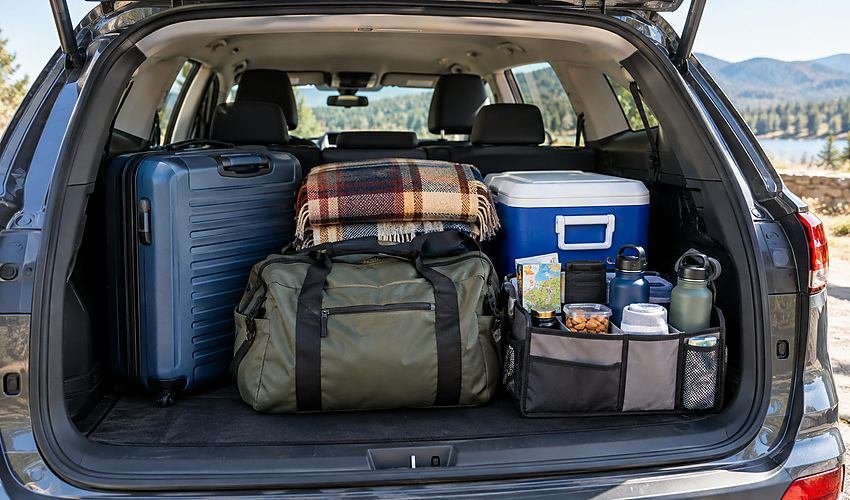
Keep Within Easy Reach
Water and snacks that can be reached without unpacking the car.
Charging cable, power source and anything needed to keep navigation available.
Sunglasses, tissues, wipes, sanitizer and a light layer or jacket.
Documents and any medication normally carried during the journey.
Do not bury something you expect to use every hour under the luggage.
Luggage Can Stay Separate
Items needed only after arrival can stay in the trunk or luggage area.
This simple separation keeps the passenger area cleaner and reduces repeated unpacking at stops.
How to Organize the Car So Useful Items Stay Reachable
Car organization is not about filling the vehicle with accessories.
It is about putting items where their use makes sense.
| Area | Good use |
|---|---|
| Driver/passenger reach | Phone cable, sunglasses and toll or payment needs |
| Center area | Tissues, wipes and a small rubbish bag |
| Rear passenger area | Snacks, water and entertainment |
| Trunk | Suitcases and arrival-only items |
| Easy-access safety area | Roadside and emergency supplies |
Keep the driver’s area free from loose objects that could interfere with driving.
Navigation: Plan the Route Before Relying on the Phone
Navigation apps are useful during the drive, but route planning should start before departure.

This gives you a basic picture of the journey before the phone begins giving turn-by-turn instructions.
It also makes it easier to recognize when a suggested reroute is sending you somewhere very different from the route you originally intended.
Keep a Backup
Mobile data and signal quality can vary.
For routes where connectivity may be limited, consider having offline map access or another way to identify the main route.
The goal is not to avoid digital navigation.
It is to avoid having your entire trip depend on one live connection.
Weather and Road Conditions Can Change the Route
A route that works well on a clear morning may become a poor choice under different conditions.
Heavy rain, fog or snow can change how comfortable the route feels.
Flooding, snow, fires, construction or local events can affect roads and detours.
The same mileage can take much longer when conditions reduce normal traffic speed.
Weather can change whether a viewpoint, trail or scenic break still makes sense.
Check current conditions close to departure rather than relying only on what the route looked like when you first planned it.
For multi-day trips, check again before starting each major driving day.
A backup route becomes much more useful when you already understand where it goes.
When a Scenic Detour Is Worth the Extra Miles
A scenic road or worthwhile detour can become one of the best parts of a trip.
It can also turn a comfortable day into a late arrival if the extra distance is underestimated.
How many miles does the detour add to the original route?
Does a short distance still require much more time because the road is slower?
Are you planning to stop for viewpoints, towns, food or an attraction?
Will the detour push the final section into night driving or affect hotel check-in?
A scenic route is usually easier to enjoy when it is treated as part of the itinerary rather than an unplanned turn off the highway.
Worked Example: Turning a 420-Mile Drive Into a Realistic Day
Suppose you are planning a 420-mile road trip.
Your navigation app shows:
At first, leaving at 8:00 a.m. appears to mean arriving at 2:30 p.m.
Now build the real day.
| Part of the trip | Time |
|---|---|
| Navigation drive time | 6 hr 30 min |
| Fuel stop | 20 min |
| Lunch | 45 min |
| Two rest stops | 30 min |
| Scenic detour | 40 min |
| Planned total | 8 hr 45 min |
That changes several decisions.
A 3:30 p.m. activity at the destination no longer makes sense.
A 6:00 p.m. dinner reservation might still work.
If the scenic detour is optional, you now know exactly what it costs in time.
Add the Fuel Estimate
Assume:
- distance: 420 miles
- vehicle economy: 28 MPG
- fuel: $3.40 per gallon
15 × $3.40 = $51
Your planning estimate is around $51 in fuel before accounting for differences in driving conditions or fuel prices.
Now the road trip has a route, realistic timing, estimated fuel cost, planned stops, an optional detour and room for a backup decision.
That is much more useful than knowing only that the destination is 420 miles away.
Car Travel With PaxTravelTweaks for Different Travelers
The planning method stays similar, but priorities can change depending on who is traveling.
Two adults may be able to share driving and adjust stops more easily. Both should understand the main route rather than leaving every decision to one driver.
Family car travel often needs more flexibility around food, bathrooms, entertainment and rest. An easier route can be better than the absolute fastest route.
Solo drivers cannot share navigation or driving. Keep the schedule realistic and avoid planning a day that depends on driving longer than feels comfortable.
Pet travel can change stop frequency, accommodation choices and where breaks happen. Check animal needs and hotel rules before setting the route.
Common Road-Trip Planning Mistakes
Navigation time is not the full travel day. Add fuel, meals and the breaks you already know will happen.
Tolls, parking, accommodation and meals can change which route is actually cheaper.
Items needed during the drive should not require unloading luggage at every stop.
Several quick stops can turn into hours. Keep the detours that are genuinely worth the time.
A warning light or obvious tire issue should not become part of the road-trip plan.
A long drive can change quickly. Leave room before activities, meals or appointments at the destination.
What to Keep in a Roadside Emergency Kit
The exact kit should fit the vehicle, weather and route.
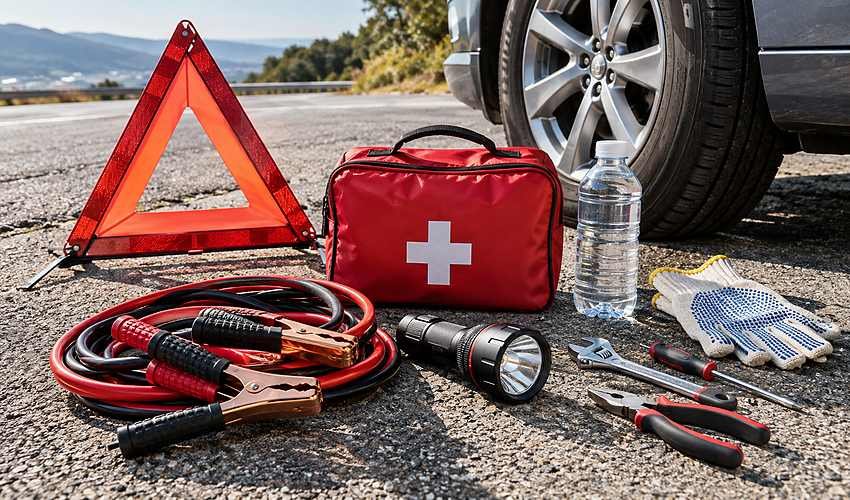
A basic road-trip kit may include items such as:
For winter driving, remote areas or unusual road conditions, the kit may need to change.
Do not treat one generic list as suitable for every road trip.
How The Travel Tweaks Checks Car-Travel Guidance
The Travel Tweaks approach treats road-trip planning as a chain of connected decisions.
The route affects the driving time.
Driving time affects the number and location of stops.
Stops affect arrival time.
The chosen vehicle and route affect fuel cost.
Weather and road conditions can change all of them.
Check the Decisions That Can Change the Whole Drive
The editorial process starts with the route and checks each major decision against the rest of the journey rather than presenting isolated road-trip tips.
Drive time is considered alongside real stops. Cost includes more than fuel. Overnight locations are checked against the next section of the route. Weather and current road information are treated as details that may need checking again close to departure.
The result should be a plan that still makes sense once real travel begins.
PaxTravelTweaks Road-Trip Checklist
Before leaving, make one final pass through the drive.
You do not need every part of the drive scheduled minute by minute.
You need enough information to know whether the trip actually works.
Frequently Asked Questions
What does car travel on PaxTravelTweaks mean?
Car travel on PaxTravelTweaks refers to a road-trip planning approach that considers the route, vehicle, realistic travel time, costs, stops and backup options together instead of planning each part separately.
Is car travel with PaxTravelTweaks the same topic?
Yes. Car travel with PaxTravelTweaks and car travel on PaxTravelTweaks are search variations around the same road-trip planning topic.
How should I prepare my car for a long road trip?
Start with the vehicle’s current condition. Check items such as tires, fluids, lights and any unresolved warning indicators. Follow the maintenance guidance for your particular vehicle and deal with known problems before departure.
What should I pack for a road trip?
Pack for both comfort and unexpected delays. Water, snacks, charging equipment, travel documents and weather-appropriate items can be useful. Keep frequently needed items accessible instead of burying everything inside luggage.
How do I calculate fuel cost for a road trip?
Divide the trip distance by your vehicle’s estimated miles per gallon, then multiply the number of gallons by the expected fuel price. Treat the result as an estimate since driving conditions and actual fuel prices can change.
Should I choose the fastest route or a scenic route?
Choose according to the purpose of the trip. The fastest route may work better when arrival time matters. A scenic route can be worthwhile when the journey itself is part of the trip and the added time fits comfortably into the schedule.
What belongs in a roadside emergency kit?
The kit should match the route, weather and vehicle. Common items can include first-aid supplies, a flashlight, charging equipment, water, roadside visibility equipment and vehicle-specific tire or starting equipment.
How much extra time should I allow beyond the GPS estimate?
There is no single amount that fits every journey. Start by adding the time you already expect to spend on fuel, meals and rest stops, then leave some room for traffic or other delays. A longer road trip usually needs a larger buffer.
Final Thoughts
Car travel on PaxTravelTweaks works best when the road trip is planned as more than a distance between two points.
Choose a route that fits the purpose of the journey. Check that the vehicle is ready. Turn the GPS estimate into a realistic travel day. Calculate the wider cost, plan sensible stops and know what you will do if conditions change.
The aim is not to predict every part of the drive.
It is to leave home with a route that still makes sense once real travel begins.