
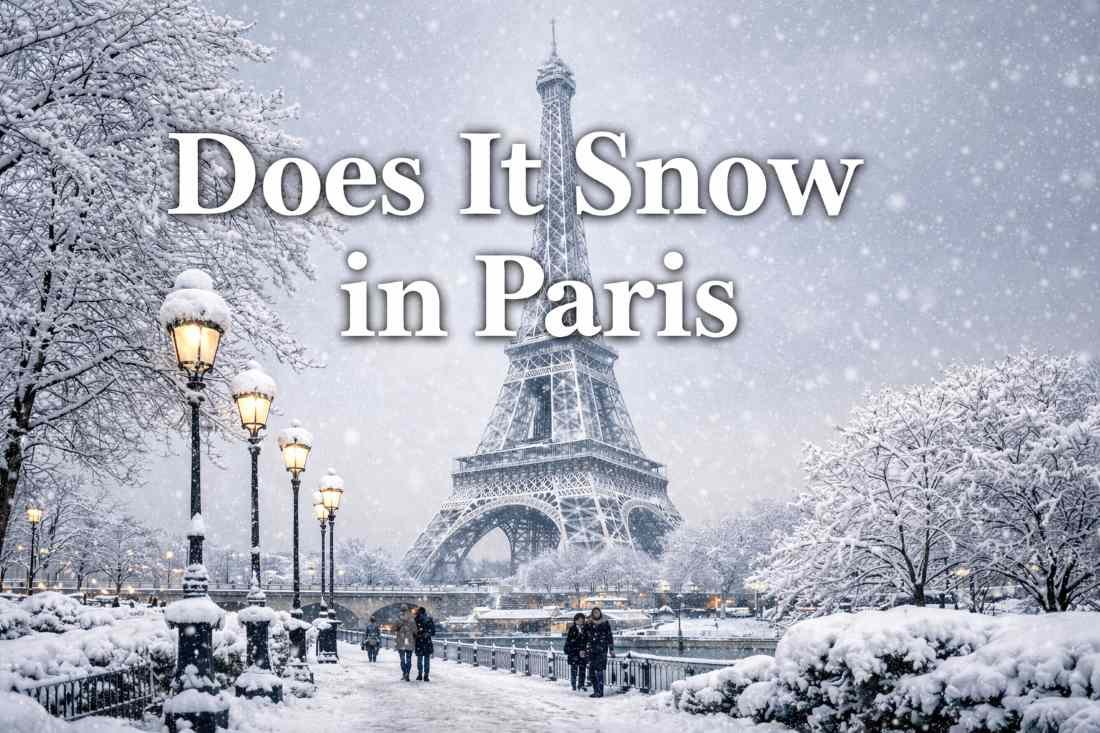
Snow in Paris is possible, but it is not a guaranteed winter scene. Many travelers imagine the Eiffel Tower covered in white or Montmartre glowing under falling flakes. In reality, Paris has a temperate oceanic climate that produces cool, damp winters with occasional snowfall rather than prolonged snow cover. Understanding when snow is most likely, how often it occurs, and how it affects transportation and travel plans helps visitors prepare realistically.
Paris is located in northern France within the Île-de-France region. The Atlantic Ocean and the North Atlantic Drift moderate winter temperatures, while short-lived Arctic air intrusions create the conditions necessary for snow. The result is a city that experiences winter chill but rarely endures severe snowstorms. Many travelers researching the Best Time to Visit Paris consider whether snowfall will shape their experience.
Does It Snow in Paris During the Winter Months?
Yes, it does snow in Paris during winter, particularly between December and February. However, snowfall is usually light and temporary. Most winters bring at least a few days of flurries or sleet, but significant accumulation that lasts more than a couple of days is uncommon.
Average winter temperatures explain this pattern. Daytime highs typically range from 7°C to 8°C, while nighttime lows hover around 2°C to 3°C. Because temperatures often remain slightly above freezing, precipitation frequently falls as cold rain instead of snow. For snow to accumulate, temperatures must drop closer to or below 0°C while moisture is present.
Urban heat also reduces snow retention. Buildings, roads, and underground systems release stored warmth, causing snow to melt quickly. Elevated neighborhoods such as Montmartre may hold snow slightly longer than areas along the Seine River. Travelers planning a winter Paris Itinerary should build flexibility into their schedule in case conditions shift between rain and light snow.
Why Does Paris Rarely Experience Heavy Snowfall?
Several climate factors limit heavy snow accumulation in Paris:
- The Atlantic Ocean moderates winter temperatures and prevents prolonged freezing.
- The North Atlantic Drift transports relatively warm water toward Western Europe.
- Westerly winds frequently bring mild, moist air instead of sustained Arctic cold.
- Paris sits at low elevation without mountains to enhance snowfall.
- Urban heat from buildings and infrastructure accelerates melting.
These combined influences mean snowfall events are usually brief and moderate rather than intense or long-lasting. Because snow is unpredictable, visitors often focus on museums, galleries, and other things to do in paris rather than planning around winter sports.
You Can Also Read: Paris Indoors Travel Guide: Experience Elite Indoor Athletics in the Heart of Paris
What Is Paris Winter Weather Like Compared to Other European Cities?
Paris shares similarities with London but differs from more continental cities like Berlin or transatlantic cities like New York.
| City | Avg January High | Avg Snow Days | Climate Type |
|---|---|---|---|
| Paris | 7°C | 5–10 | Oceanic |
| London | 8°C | 3–7 | Oceanic |
| Rome | 12°C | 0–2 | Mediterranean |
| Berlin | 3°C | 10–20 | Continental |
| New York | 4°C | 10–15 | Humid Continental |
Travelers familiar with winter travel in the United States, including seasonal things to do in nyc, may notice that Paris experiences fewer intense snowstorms and milder overall cold.
Paris vs London and Rome
- Paris is slightly colder than London during nighttime hours.
- London experiences similar rainfall but slightly fewer snow days.
- Rome has milder winters due to Mediterranean air masses.
- Snow in Rome is rare compared to Paris.
- Frost is more common in Paris than in both cities.
Paris vs Berlin and New York
- Berlin experiences more frequent and longer-lasting snow cover.
- New York receives heavier snow from coastal winter storms.
- Paris snowfall events are typically shorter and lighter.
- Berlin’s average January temperatures are lower than Paris.
- New York often records higher total annual snowfall.
When Was the Last Significant Snowfall in Paris?
Notable snowfall occurred in February 2018, when several centimeters accumulated across the city. Similar disruptions were observed in 2010 and 2013.
During such events, transportation slows but rarely shuts down completely. The Paris Metro continues operating underground, while airports deploy de-icing equipment to maintain flight schedules. Travelers monitoring flexible bookings sometimes compare options through Travel Tweaks Hotels when winter forecasts appear uncertain.
Is Paris Beautiful in the Snow?
Paris becomes visually striking during snowfall. Historic rooftops, riverbanks, and monuments appear softened by white covering.
Even the Best Parks in Paris take on a calm and photogenic atmosphere when lightly dusted with snow, offering peaceful winter walks away from busy boulevards.
Best Snow Views:
- Montmartre provides panoramic city views during snow.
- The Seine riverbanks create reflective winter scenes.
- Major landmarks become especially photogenic during light accumulation.
- Historic courtyards appear quieter and more atmospheric.
You Can Also Read: Things to Do in Paris with Kids: Easy Itineraries, Parks, Museums, and Day Trips
Is Winter a Good Time to Visit Paris?
Winter offers lower tourist density and reduced accommodation prices compared to peak seasons. Snow is not guaranteed, but festive lighting and cozy cafés create strong seasonal appeal.
Colder months also encourage visitors to explore local cuisine, and many travelers use the season to discover What to Eat in Paris, from warm croissants to traditional stews.
Winter Pros and Cons:
- Fewer crowds at museums and major landmarks.
- Lower airfare and accommodation prices.
- Cozy café culture and festive lighting.
- Shorter daylight hours.
- Higher chance of gray, rainy days.
Winter Hotel Prices:
- January often has the lowest average room rates.
- February remains cheaper than spring and summer.
- Luxury hotels frequently offer promotional discounts.
- Boutique hotels reduce prices to attract off-season guests.
Travelers looking for added value sometimes explore seasonal promotions such as Travel Tweaks Offers before confirming reservations.
Winter therefore provides strong value for budget-conscious travelers seeking central locations. Those researching broader travel tweaks for European city breaks often find Paris particularly appealing during the quieter months.
Final Thoughts
Snow does fall in Paris, but it is occasional, light, and short-lived. January and February present the highest chance, while December snowfall remains less predictable. Atlantic moderation and urban warmth limit heavy accumulation. Compared to Berlin or New York, Paris experiences milder winters and fewer snowstorms.
For travelers, winter remains appealing due to lower prices and smaller crowds. Waterproof layers are usually more practical than heavy snow gear. Although climate trends suggest declining snowfall frequency, picturesque snowy days in Paris remain possible and memorable.
Frequently Asked Questions
Does it snow in Paris every year?
Most winters include light flurries or sleet, though measurable accumulation does not occur annually.
What month has the highest chance of snow in Paris?
January and February have the greatest likelihood.
How many snow days does Paris average annually?
Paris averages approximately 5 to 10 days per year with snow or sleet.
Is Paris colder than London in winter?
Paris is slightly colder at night, but overall temperatures are similar.
Does it snow in Paris at Christmas?
Snow at Christmas is possible but statistically uncommon. Rain is more likely.