
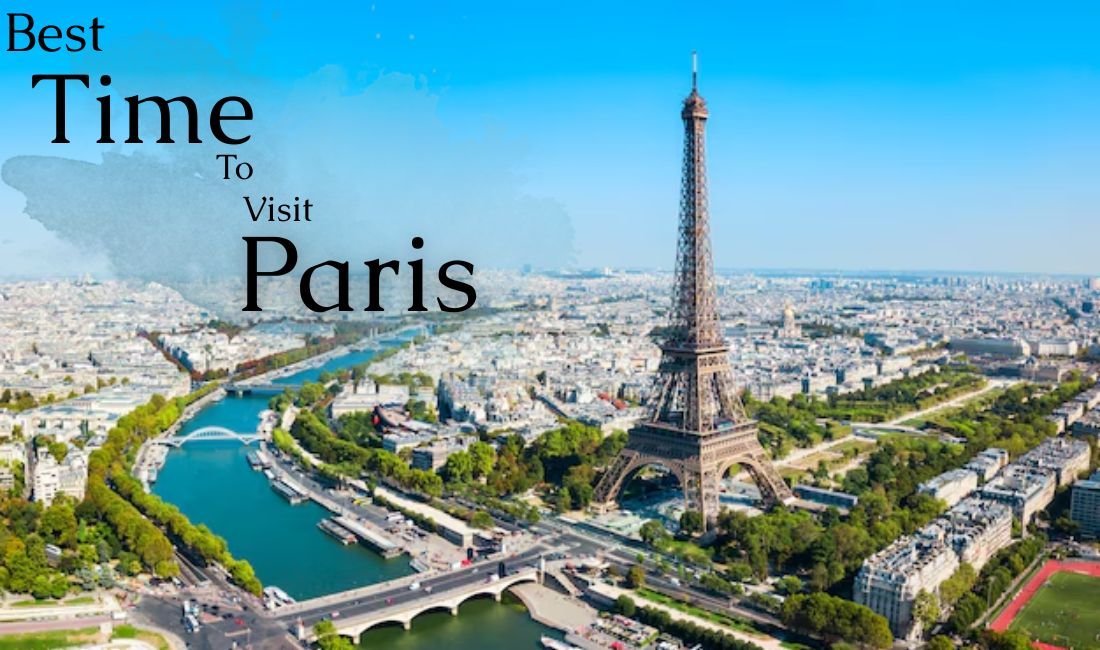
I booked my first flight to Paris on a Tuesday night in October, with a glass of wine I probably shouldn’t have poured and a tab open to a weather chart I definitely didn’t fully read. I landed in November. It was grey and wet, and the line at the Louvre was still, inexplicably, an hour long. I fell completely, irrationally in love with the city, and then I went back three more times, in three different seasons, to figure out what I’d missed.
So when people ask me for the best time to visit Paris, I don’t answer the same way twice because the right month depends entirely on what version of Paris you’re looking for. Here’s everything I learned, the hard way and the beautiful way. If you’re still in the early stages of planning your trip, TravelTweaks is a good place to start pulling everything together before you dive in.
The Quick Answer: When is the Best Time to Visit Paris?
The best answer to “when to visit Paris” is late April through early June, and September through October. These months usually bring mild weather, lively cafés, and smaller crowds that haven’t yet reached the “impossible to exist near the Eiffel Tower” level.
But every single season has something real to offer, and knowing what you’re walking into changes everything. It helps to come in with a rough Paris itinerary so you’re not making decisions on the fly while jet-lagged at 7 am.
| What You Want | Best Time to Go |
|---|---|
| Best overall experience | Late April to June |
| Best weather | June to August |
| Fewest crowds | November to March |
| Cheapest flights and hotels | January to February |
| Most romantic atmosphere | October |
| Best pick for solo female travelers | May or September |
Paris doesn’t have a bad season. It has the wrong season for the wrong traveler. Here’s exactly what you’re choosing between.
Spring in Paris: April and May Are the Best Times to Visit
I’ll say it plainly. May in Paris is the closest thing to living inside a painting that I’ve ever experienced. The cherry blossoms do that thing you’ve seen on Instagram, except standing underneath them in the Parc de Sceaux feels nothing like a photograph. The light is gold before it should be. Everyone is sitting outside with the wine they ordered before noon, and no one judges anyone for it.
What Spring Paris Actually Feels Like
April is the in-between. Some cold days still lurk, and it will rain on you at least twice. Pack a light trench coat, not a jacket. May is the version that justifies every flight price. The city wakes up in a way that’s specific to this month: café chairs get dragged back outside, museums extend their hours, and there’s a collective exhale in the city that you can genuinely feel.
The Nuit des Musées in May, when museums across the city open late and are free, is one of the most Parisian evenings I’ve had. Standing in the Musée d’Orsay at 11 pm, surrounded by Impressionists and absolutely no queues, was an experience I think about often.
- Temperature: 10°C to 19°C
- Rainfall: Moderate, especially in April
- Crowd level: Medium, building toward peak
- Hotel prices: Mid-range. If you want to lock in something decent before rates climb, it’s worth browsing Travel Tweaks hotels early.
Don’t miss:
Parc de Sceaux for cherry blossoms (check bloom calendars, usually mid-April), an evening Seine cruise when the light is still pink at 8 pm, and the Marché d’Aligre on a Saturday morning when the strawberries are so red they look fake. Spring is also the best season to eat your way through the city properly. A good starting point is this guide on what to eat in Paris so you know what to order and where to find it.
Summer in Paris: Glorious, Crowded, and Worth It Anyway
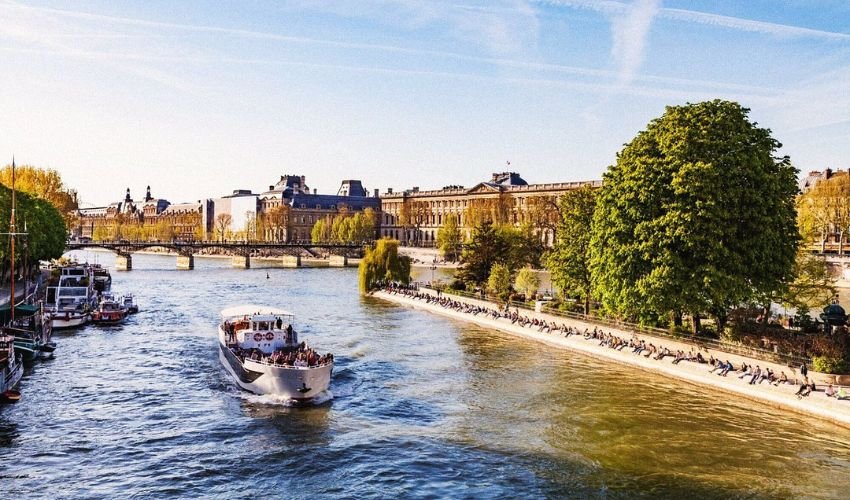
Let me be the one to tell you what the travel guides suggest: July and August in Paris can feel like a theme park version of itself. The Eiffel Tower area is a wall of tourists. The Louvre on a Saturday morning in August is a sensory endurance test. Lines for popular cafés stretch down the block. And yet, I had one of my best days in Paris on a sweltering August afternoon when I gave up on any plan and just walked.
That’s the secret to summer in Paris. Abandon the itinerary entirely. The city’s own residents largely vanish to the coast in August, which means the neighborhoods that are actually lovely, like the Canal Saint-Martin, Belleville, and the streets around Oberkampf, feel quieter and more local than any other time of year.
The Bastille Day Factor
If you can be in Paris on July 14th, do it. Bastille Day is one of those rare occasions where a national holiday actually lives up to itself. The fireworks behind the Eiffel Tower are, objectively, the most theatrical thing I’ve seen in a European city. Book your viewing spot hours in advance, bring a picnic, and accept that you will be surrounded by ten thousand other people all having the exact same feeling. It’s worth it.
The French Open runs through late May into early June. If tennis is your thing, this is a genuinely thrilling time to be in the city. The energy around Roland-Garros spills into the whole Left Bank.
Summer is also a perfectly manageable family season. If you’re traveling with children, there’s no shortage of things that work well for all ages. This list of things to do in Paris with kids is worth bookmarking before you travel.
- Temperature: 18°C to 28°C
- Daylight: Up to 16 hours
- Crowd level: Peak, very high
- Hotel prices: Highest of the year
Fall in Paris: My Personal Favorite, and I’ll Fight You on It
October in Paris is when the city stops performing and starts being itself again. The tourists have largely gone. The light turns this particular amber-gold that feels like it was engineered to make every street look like a painting. The cafés fill back up with regulars who have real opinions about their wine and will share them. The leaves in the Tuileries go from green to ochre to a red so saturated it looks like someone turned up the saturation in real life.
I walked across the Pont de la Tournelle on an October evening and the Notre Dame was glowing in the last light, and the Seine was that dark green it gets in autumn, and I felt the specific emotion you feel when a place surpasses what you expected of it. This is what I think people mean when they say Paris ruined other cities for them.
Fall is when Paris stops being a postcard and becomes a city. A real one, with regulars and wet leaves on the pavement and wine that costs less because nobody’s watching.
Fashion Week and the Cultural Calendar
September brings Paris Fashion Week, which is genuinely thrilling to exist near even if you’re not attending anything. The streets around Saint-Germain and the Marais fill with an energy that’s electric and a little absurd in the best possible way. The city’s cultural season kicks back into gear: new museum exhibitions open, galleries launch, and restaurants dust off their autumn menus.
October sees the Nuit Blanche arts festival, when installations take over the city overnight. I’ve stayed up until 4am for this and felt zero regret the next day, which says something.
- Temperature: 8°C to 18°C
- Rainfall: Increases in November
- Crowd level: Low to moderate
- Hotel prices: Better deals start appearing. It’s a good window to check TtweakHotel offers for something comfortable without the peak season markup.
Winter in Paris: Underrated, Underpriced, and Unexpectedly Moving
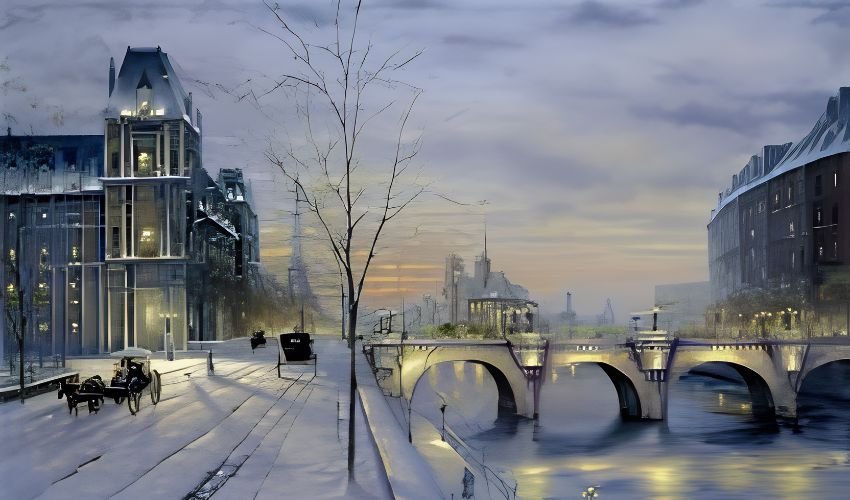
My first trip was in November, and I’ve already told you I fell in love with the city. That wasn’t despite the grey. It was partly because of it. Paris in winter has a mood that spring and summer simply don’t offer: introspective, literary, slightly melancholy in a way that makes you want to write things in notebooks and drink coffee for two hours and think.
December is the obvious exception. The city decorates itself in a way that is either magical or overwhelming, depending on your tolerance for fairy lights and crowds. The Christmas markets along the Champs-Élysées are undeniably lovely if you accept them for what they are: beautiful, touristy, and worth twenty minutes of your time. The Galeries Lafayette rooftop at Christmas, though, that’s something you should actually do.
Why January and February Are Quietly Brilliant
January is when Paris belongs to the Parisians. Flights are cheap, and if you time it right, there are some genuinely good flight deals through TravelTweaks that make the off-season even more worthwhile. Hotels are genuinely affordable too, and finding a well-located room at a reasonable rate is much easier when you’re not competing with half of Europe for the same arrondissement. Travel Tweaks hotels is a solid place to compare options without the peak season noise.
The queues at the Louvre are the shortest they’ll be all year. You need a proper coat and your expectations managed around grey skies, but in exchange, you get a city that isn’t performing for you. You’re just in it. Bistros are full at lunch because Parisians eat lunch properly, at tables, without staring at their phones. Museums are peaceful enough to actually look at things.
- Temperature: 3°C to 8°C
- Daylight: Around 8 to 9 hours
- Crowd level: Lowest of the year
- Hotel prices: Lowest of the year
Snow is rare, maybe once or twice a winter, and never reliably. If you’re curious about the actual likelihood and what it looks like when it does happen, this piece on whether it snows in Paris answers it properly.
What Nobody Tells Solo Female Travelers About Paris Timing
Beyond weather and crowds, season actually matters for solo safety and comfort in ways travel guides usually skip. Here’s what I’ve learned:
1. Spring and fall are the sweet spots for solo comfort. Long-ish days, busy terraces, and a city that’s alive without being overwhelming. You can walk home from dinner at 9 pm in May and it’s still light. That matters.
2. Summer tourist density is both a comfort and a caution. Busy areas feel safe. They’re also prime pickpocketing territory around Sacré-Coeur and the Eiffel Tower. Stay alert without being paranoid.
3. Winter evenings close early. In January, it’s dark by 5 pm. Plan dinners earlier, or embrace the brasserie culture of eating at 7:30 pm with wine and no agenda. Actually, do that regardless of the season.
4. The Métro is your friend in all seasons. Paris has one of the best urban transit systems in the world, and it runs late. Learn four lines before you land, and you’ll feel immediately capable. If you want a proper visual reference for getting around, the TtweakMaps city guide is a handy tool to have on your phone.
5. Sitting alone at a café is a completely normal and respected activity. This is one of Paris’s greatest gifts to the solo traveler. A book, a window seat, a crème, two hours. This is not sad. This is living correctly.
6. Book museums in advance in summer; walk in freely in winter. The difference in queue times between peak and off-peak is genuinely staggering. A winter morning at the Louvre versus an August one is not the same experience at all.
If You Could Only Go Once: Which Paris Season Should You Choose?
May for a first visit. October if you’re going back. January if you need to city for yourself. I don’t mind trading sunshine for solitude and drastically cheaper flights. If you want to find the best flight prices for any of these windows, it’s worth checking TtweakFlight discount codes before you book. The savings in the off-season, especially, can be significant. Once you’re ready to lock things in, TravelTweaks bookings handles flights and accommodation together, which simplifies the whole process.
There is no wrong answer, only the wrong expectations packed alongside your clothes.
Paris has the extraordinary quality of rewarding whatever you bring to it. If you arrive in November with a long reading list and no agenda, it delivers. If you arrive in June wanting golden light and long evenings on a terrace, it delivers that too. The mistake is arriving in August expecting the quiet contemplative city and being surprised by the crowds, or arriving in January expecting summer warmth and being surprised by the grey.
Every version of Paris is a real version. The one you visit will be the right one, as long as you know which one it is.
Frequently Asked Questions – Best Time to Visit Paris
May is one of the best months to visit Paris because the weather is usually mild, the city feels lively, and outdoor cafés are especially enjoyable.
Paris is usually least crowded in early spring and winter, especially in March and January.
Yes, Paris is still worth visiting in winter. It is quieter, cheaper, and very pretty with seasonal lights.
Try to avoid July and August, when it can be hot and very crowded.
Bring comfy shoes, a light jacket, and an umbrella. They’ll come in handy for long walks, cooler evenings, and the occasional rain shower.
Whatever time of year you land at Charles de Gaulle and take that RER into the city and walk out into Paris for the first time, or the fifth time, it will do the thing it always does. It will be more itself than any other place you’ve been. That’s the only constant. The season just changes, which version of itself it shows you.