
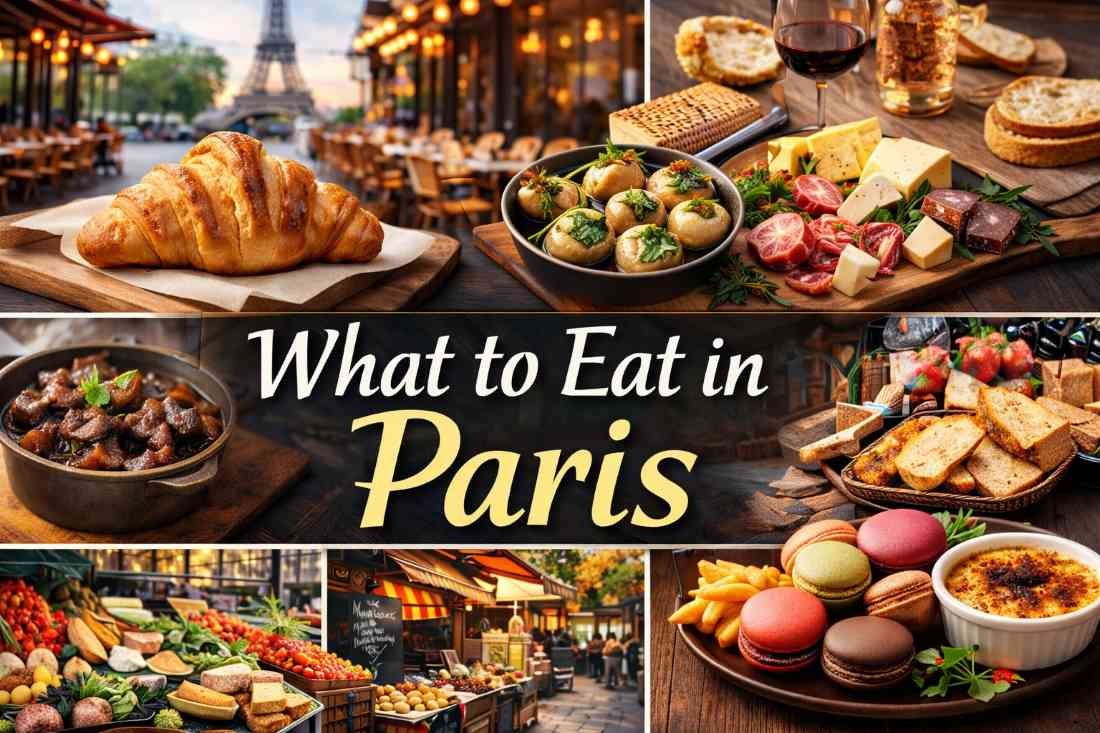
Paris is not just a capital city. Paris represents culinary identity, tradition, refinement, and innovation all at once. Travelers who search for what to eat in Paris are not simply looking for a list of dishes. They want guidance on where to eat, how much to spend, what locals actually enjoy, and how to avoid tourist traps. Parisian food culture connects artisan bakers, neighborhood bistros, Michelin-star chefs, open-air markets, and multicultural street food. Exploring food is also one of the most memorable things to do in paris, especially for travelers who want to understand the city beyond its landmarks.
This comprehensive guide explores exactly what food to eat in Paris France, how to navigate neighborhoods, how pricing works, which dishes define authenticity, and what not to eat in Paris as a visitor. Whether you have three days or three weeks, this guide will help you eat with confidence and structure your culinary stops into a smart Paris Itinerary.
What Makes Paris Famous for Food?
French cuisine defines Parisian culinary prestige. The city built its global reputation through artisan bread, butter-rich pastries, slow-cooked stews, raw-milk cheeses, and wine pairings that follow centuries-old traditions. The Michelin rating system began in France, and the Michelin Guide still shapes fine dining standards worldwide.
Four pillars define Parisian food identity:
- Artisan baking
- Bistro classics
- Cheese and wine heritage
- Market culture
Understanding these foundations helps you identify the best food to eat in Paris rather than relying on generic restaurant signage. Planning tastings around seasonal menus is easier when you consider the Best Time to Visit Paris, since ingredients and specialties shift throughout the year.
Start with Iconic Dishes for a First-Time Visit
If this is your first trip, begin with these essentials:
- Croissant
- Baguette
- Steak frites
- Boeuf bourguignon
- French onion soup
- Escargots
- Ratatouille
These dishes represent technique, regional influence, and Parisian adoption. Boeuf bourguignon originated in Burgundy but became a staple in Paris bistros. Ratatouille comes from Provence yet appears across Paris menus.
A balanced first-time tasting plan includes one bakery visit, one casual bistro meal, one market exploration, and one dessert-focused stop. Families planning things to do in paris with kids often find that crêpes, pastries, and market visits make food exploration engaging and accessible for younger travelers.
Which Neighborhoods Offer the Best Food in Paris?
Different districts shape different dining experiences.
Le Marais
Falafel shops, Jewish bakeries, and modern bistros define this area. The legendary falafel scene grew around L’As du Fallafel. Street food thrives here.
Saint-Germain-des-Prés
Historic cafés, literary culture, refined dining. Expect classic French dishes with polished presentation.
Montmartre
Touristic near Sacré-Cœur but still home to authentic small bistros on side streets.
Marché des Enfants Rouges
Paris’ oldest covered market. Moroccan tagines, French produce, Japanese bento coexist under one roof.
After exploring these areas, many visitors relax in nearby gardens such as those featured in guides to the Best Parks in paris, pairing picnics with fresh baguette, cheese, and fruit.
How Much Does It Cost to Eat in Paris?
Paris can be affordable or expensive depending on choices.
| Meal Type | Average Price |
|---|---|
| Bakery breakfast | €3–€6 |
| Casual lunch menu | €14–€20 |
| Bistro dinner | €25–€40 |
| Michelin-star tasting | €120–€350 |
Lunch menus offer exceptional value. Many upscale restaurants provide fixed-price midday options at half the dinner cost.
If you want to eat well in Paris on a budget:
- Buy picnic supplies from markets.
- Choose “formule déjeuner.”
- Avoid restaurants directly facing major monuments.
- Drink house wine instead of cocktails.
Travelers who have compared dining costs with things to do in nyc often notice that Paris lunch specials can feel surprisingly reasonable by comparison.
What Desserts Define Parisian Cuisine?
Paris pastry culture remains unmatched. Macarons achieved international fame through houses like Ladurée. Almond shells sandwich flavored ganache in precise symmetry.
Pain au chocolat differs from a croissant by containing dark chocolate batons. Crème brûlée features custard with torched caramelized sugar.
Top pâtisseries include:
- Pierre Hermé
- Cédric Grolet Opéra
- Du Pain et des Idées
Each focuses on butter quality, lamination technique, and aesthetic precision.
Which Food Markets Offer the Best Local Bites?
Markets connect visitors directly with producers.
Seasonal highlights include:
- Spring asparagus
- Summer strawberries
- Autumn mushrooms
- Winter oysters
Cheese vendors explain aging duration. Wine sellers recommend pairings. Butchers discuss cuts for stews. Market visits answer the question of what do locals eat in Paris daily: simple, fresh, seasonal products.
You Can Also Read: Travel Tweaks Offers That Actually Save You Money on Your Next Trip
What Should You Avoid Eating in Paris as a Tourist?
Knowing what not to eat in Paris protects your experience.
Avoid:
- Restaurants with laminated multilingual menus displayed outside.
- Frozen baguettes labeled simply “baguette” instead of “tradition.”
- Overly cheap macarons sold in bulk.
- Generic “French combo” menus near landmarks.
Quality indicators include:
- Limited menu size.
- Handwritten chalkboards.
- French-speaking clientele.
- Seasonal ingredient emphasis.
Tourist areas are not always bad, but high turnover reduces culinary care.
Are Michelin-Star Restaurants Worth It in Paris?
Dining at Michelin-star restaurants can redefine your understanding of flavor precision. The Michelin Guide awards one to three stars based on ingredient quality, technique mastery, chef personality, and consistency.
Three-star restaurants deliver culinary artistry. One-star venues often offer better value and accessibility. Lunch reservations provide cost efficiency. Wine pairings elevate the experience but increase total cost significantly. Michelin dining is worth it if you seek culinary craftsmanship beyond traditional bistros.
You Can Also Read: Travel Tweaks Hotels: Your Guide to Budget-Friendly Hotel Choices
What Are the Top 15 Foods to Eat in Paris France?
- Croissant
- Baguette
- Steak frites
- Boeuf bourguignon
- French onion soup
- Escargots
- Duck confit
- Ratatouille
- Jambon-beurre
- Cheese plate
- Macarons
- Pain au chocolat
- Crème brûlée
- Crêpes
- Oysters
These dishes represent the best food to eat in Paris across price ranges and neighborhoods.
Final Thoughts
Paris offers far more than a checklist of famous dishes. The city represents culinary precision, cultural pride, seasonal awareness, and dining ritual. Knowing what to eat in Paris allows you to move beyond tourist menus and experience authentic French flavor. From croissants at dawn to steak frites in candlelit bistros, from market cheese tastings to Michelin-star artistry, Paris rewards those who choose thoughtfully.
If you prioritize quality indicators, explore neighborhoods strategically, respect seasonality, and balance budget with experience, you will eat exceptionally well in Paris.
FAQs (Frequently Asked Questions)
What is the best food to eat in Paris?
Steak frites, croissants, cheese plates, and macarons consistently rank as top choices.
What food should I try first in Paris?
Start with a croissant from an artisan bakery and a classic bistro lunch.
What not to eat in Paris as a tourist?
Avoid generic set menus near landmarks and low-quality frozen bakery items.
Is Paris expensive for food?
It ranges widely. Budget travelers can eat well for €15–€20 per meal.
Is Paris vegetarian-friendly?
Yes. Many restaurants offer vegetable-based dishes and plant-focused menus.
Where do locals eat in Paris?
Locals prefer neighborhood bistros, markets, and small bakeries away from major monuments.
What dessert is Paris most famous for?
Macarons and crème brûlée remain iconic symbols of Parisian pastry culture.