

Choosing a hotel looks simple until two rooms with similar prices offer completely different stays. One may be cheaper at first but come with a non-refundable rate. Another may cost more per night yet give you a better location and a room that actually fits the people traveling with you.
Travel Tweaks Hotels is about looking beyond the headline rate. The goal is to understand what you are really booking before you pay.
A good hotel choice should fit the way your trip will work. Location affects how much time you spend moving around. The exact room matters because two guests in the same hotel can have very different experiences. Booking terms matter because a lower rate is not always better when plans might change.
The broader Travel Tweaks approach follows the same idea: small decisions can change how smoothly the whole journey works.
Compare hotels in this order: choose the right area first, check the exact room category, compare the same rate conditions and then calculate the real cost of the stay. After that, read recent reviews for repeated problems that could affect you.
What Does Travel Tweaks Hotels Mean?
Travel Tweaks Hotels is a way of making hotel decisions through the details that often get missed during a quick search.
A traveler may open several hotel tabs and begin comparing star ratings. Another person may sort everything by lowest price. Neither method tells the full story.
A four-star hotel can have a tiny entry-level room. A three-star property may offer more space and a better location for the same trip. The cheaper option may also become more expensive after transport or meals are considered.
The idea behind Travel Tweaks Hotels is to slow the comparison down just enough to notice those differences. You do not need to inspect every possible feature. Focus on the details that could change your own stay.
Start With the Neighborhood Before the Hotel
A good hotel in the wrong area can make a trip harder than an average hotel in the right location.
Imagine two properties in the same city. Hotel A costs less, but it sits far from the places you plan to visit. Hotel B is more expensive each night but allows you to walk to most of your itinerary.
The first hotel may still be cheaper on paper. Once daily transport and lost time are considered, the difference can become much smaller.
Location also changes the experience after sightseeing ends. A traveler who likes late dinners may prefer an area that stays active in the evening. Someone traveling with children may value a quieter street and easier transport.
The site’s guide to where to stay in Paris shows this clearly. It starts with the neighborhood and daily route before narrowing the decision to individual hotels.
A hotel near the places you will actually visit can save more time than a cheaper room across the city.
The route back after dinner can matter just as much as the morning journey to the first attraction.
A lower rate loses some value when every day begins with a long transfer.
Families, couples and solo travelers may value different parts of the same neighborhood.
Compare the Exact Room, Not Just the Hotel
This is one of the most important hotel tweaks.
Two booking websites can show the same hotel at different prices while selling different room categories. Even the hotel’s own website may have several versions of what looks like the same room.
A Standard King may not be comparable with a Superior King. One may be smaller or face a less desirable part of the property. The other could include more space or different booking terms.
Before deciding that one website is cheaper, check whether you are actually comparing the same product.

Check the Room Size
Room size matters more in some destinations than others.
A compact room may be comfortable for a solo weekend trip. The same room can become frustrating when two people arrive with large suitcases and plan to stay for a week.
Where possible, look for the floor area in square feet or square meters. Photographs are useful, but wide-angle lenses can make small rooms appear larger.
The stated floor area gives you another point of reference. Think about how the room will be used. If you only plan to sleep there, a smaller room may be fine. If you expect to work from the room or spend slow mornings inside, extra space can become more valuable.
Check the Bed Setup
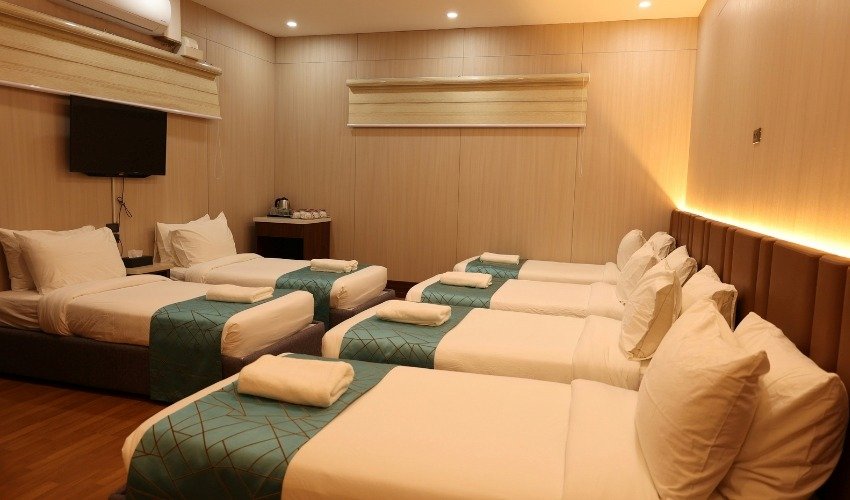
“Room for four guests” does not always mean four people get proper beds.
A family room might have two double beds. Another hotel may call a room suitable for four because it has one bed and a sofa bed. Those arrangements can feel very different after several nights.
The same problem appears with twin rooms. In some properties, twin beds can be pushed together. In others, they remain clearly separate.
Families and groups should check the exact bed configuration rather than relying on the guest-capacity number.
Check Where the Room Is Located
Room position can affect the stay almost as much as the hotel itself.
A street-facing room may have more city atmosphere but also more traffic noise. A courtyard room can be quieter but may receive less natural light.
Rooms near elevators can be convenient for some travelers. Light sleepers may prefer to be farther away from areas where people gather. The same applies to rooms above restaurants or bars.
The comparison of the best hotels in Marais Paris uses this room-level approach because properties in the same neighborhood can offer very different layouts and noise conditions.
How to Compare Hotel Prices Properly
A hotel comparison becomes useful only when the conditions are equal.
Looking at two nightly prices without checking the room and rate details can create a false comparison. The Washington Post makes the same point in its reporting on finding better hotel rates: dates, room type and cancellation conditions need to match before one price can fairly be compared with another.

Illustrative example only. The prices below are not current rates for a specific hotel.
| Detail | Hotel A | Hotel B |
|---|---|---|
| Nightly rate | $180 | $205 |
| Room | Standard Queen | Superior King |
| Room size | 18 m² | 25 m² |
| Cancellation | Non-refundable | Refundable |
| Breakfast | Not included | Included |
| Location | Longer daily transfer | Walkable to most plans |
Hotel A looks clearly cheaper when you only compare the first number.
Hotel B becomes more competitive once the room size and breakfast are considered. Its location may also reduce transport spending during the trip.
Neither hotel automatically becomes the better choice. The comparison simply becomes more honest.
When checking prices across different websites, match the same travel dates and guest count first. Then confirm that the room category and cancellation conditions are the same.
Calculate the Real Cost of the Hotel Stay
The nightly room rate is only one part of hotel cost.
Depending on the destination and property, the final stay may include taxes or mandatory charges. Parking can create another large expense when you are traveling by car.
Consumer Reports has documented how hotel charges can be difficult to see early in the booking process. Its guide to avoiding hidden fees is a useful reminder to judge the total before treating a room as a bargain.
Breakfast can also change the comparison. A cheaper room without breakfast may still be the right choice if there is an inexpensive bakery outside. At an isolated resort, paying more for a breakfast-inclusive rate could make more sense.
Optional services should not automatically be added. If you will not use the spa, a spa credit should not convince you that an expensive rate is better value.
Value only matters when the included benefit is something you would have paid for anyway. The same principle applies when judging Travel Tweaks Offers: a discount is useful only when the underlying stay still fits the trip.
Check Deposits and Card Holds Before Arrival
The amount charged during booking is not always the only amount that affects your card.
Some hotels place a temporary authorization on the payment card at check-in. This may cover possible room charges or other expenses during the stay.
The money is not necessarily a final charge, but it can reduce the available balance on the card until the hold is released.
That can matter during a longer trip. A traveler who relies on one card may arrive at the next hotel and find that part of the available credit is still tied up by the previous property.
If this could affect your budget, ask the hotel how its deposit or authorization works before arrival.
Read Hotel Reviews for Patterns, Not Just Ratings
A review score can help narrow a list, but the number alone does not tell you whether the hotel works for you.
A better approach is to read recent reviews and look for repetition.
How to Read a Review Pattern
One guest complaining about street noise may simply have had a bad night. Five recent guests mentioning the same noise deserve more attention.
The same pattern can reveal weak air conditioning or slow elevators. Guests may repeatedly mention construction nearby or rooms that feel smaller than expected.
Read enough reviews to understand what keeps coming up. Then ask whether that issue matters to your trip.
A solo traveler who spends all day outside may not care that the room is compact. Parents trying to settle young children early in the evening may care a great deal about repeated noise complaints.
Make Sure the Photos Match the Room You Are Booking
Hotel galleries often mix photographs from several room categories.
The most attractive suite can appear beside the hotel description even when you are booking the smallest room.
Before paying, open the gallery for your specific room category if one exists.
Look at details that help you understand scale. Window position can show how much natural light enters. The distance between the bed and wall can reveal whether luggage space will be tight.
Bathroom photos matter as well. Some rooms may have walk-in showers while another category has a bathtub. The difference becomes important when a traveler has mobility needs or simply prefers one setup.
If the exact room is not clearly shown, that uncertainty should be part of the decision.
Check Cancellation Terms Before You Pay
“Free cancellation” sounds simple, but the useful information is the deadline.
A rate may allow cancellation several days before arrival. Another may remain flexible until much closer to check-in. The cutoff can also use the hotel’s local time.
Do not stop at the green “free cancellation” label. Open the rate conditions and find the exact deadline.
Also check what happens after that time. Some rates charge the first night. Others can charge the full booking amount.
A slightly higher flexible rate may be worthwhile when the trip depends on uncertain flights or plans that could change. For a firm trip, the non-refundable rate may still make sense if the saving is meaningful enough.
The right choice depends on your tolerance for risk.
Direct Booking vs Third-Party Booking
There is no universal answer to whether direct hotel booking is always better.
The important thing is to compare the full rate.
A third-party booking website may show a lower price. The hotel’s own website may include different cancellation terms or a room benefit. Sometimes the prices are almost identical.
NerdWallet’s updated guide on getting cheaper hotel rooms also recommends comparing booking sites with the hotel’s own website instead of assuming one channel always wins.
When the price difference is small, think about what matters if something changes. A booking made directly with the property may make communication simpler because the hotel controls the reservation. With a third-party booking, some changes may need to go through the company that processed it.
That does not make one method automatically better. Price is only one part of the comparison.
When Hotel Loyalty Programs Are Worth Using
Hotel loyalty programs can be useful when your travel pattern naturally fits the same hotel group.
They become less useful when a traveler chooses an inconvenient property just to earn points.
Think about loyalty benefits after location and room suitability are already acceptable.
If two similar hotels fit the trip and one gives you a useful program benefit, loyalty can become the deciding factor.
Benefits may also depend on status level and booking channel. Do not assume every stay earns the same points or includes the same perks.
For occasional travelers, an independent hotel may still provide better value than staying somewhere less suitable just to remain loyal to a chain.
Hotel Details Travelers Often Forget to Verify
Small hotel features can create big differences once you arrive.
Some systems operate seasonally. If heat could affect your sleep, recent reviews can help show how the system performs.
A swimming pool, plunge pool and spa pool are not the same experience. Check photos and dimensions when the pool matters.
A hotel can have an elevator while some rooms still require a short staircase.
Verify the exact room and route through the property when step-free access or bathroom layout is essential.
Different Trips Need Different Hotel Checks
There is no single checklist that matters equally to every traveler.
Check the real bed arrangement and how much floor space remains once every sleeping space is being used.
A smaller room in the right neighborhood can work better than a larger room far from the places you want to enjoy together.
A compact room can work well, while the surrounding area and the evening route back may matter more.
Storage, laundry access and a small kitchenette can become more valuable as the number of nights increases.
Season can change these priorities too. In a city such as Paris, the best time to visit Paris can affect hotel demand as well as how much you value air conditioning or indoor space.
Can You Improve Your Room at Check-In?
Room upgrades can happen, but they should never be treated as guaranteed.
Hotels may have unsold rooms in a better category on the day you arrive. A polite question at check-in may reveal whether an upgrade is available.
That does not always mean it will be free. The hotel may offer a reduced upgrade price instead.
Special occasions can be mentioned when they are genuine, but the booking should still work even if nothing extra is provided.
Travel Tweaks Hotels Before-You-Book Checklist
Before confirming the reservation, make one final pass through the booking.
A hotel does not need to score perfectly on every point. The purpose of the checklist is to find problems that would matter to your trip before the reservation becomes difficult to change.
How The Travel Tweaks Researches Hotels
Hotel research starts with the decision a traveler needs to make.
For a neighborhood guide, location may matter most. A family hotel article needs more attention on room capacity and bed arrangements. Luxury hotel research can require a closer look at facilities because words such as “spa” or “pool” can describe very different experiences.
Room categories are checked separately where possible. This matters because the experience offered by an entry-level room may not match the photographs or facilities associated with a hotel’s most expensive suites.
Start With What Could Change the Stay
I do not treat the hotel name as the whole product. I look at the neighborhood first, then the room category and the booking conditions that apply to that exact stay.
If two travelers could book the same hotel and have very different experiences, that difference belongs in the research.
Current hotel information matters too. Facilities can change after renovations. Room names may be updated. Prices move constantly.
For that reason, hotel recommendations should focus on details that can be checked while still reminding travelers to confirm the exact rate and room conditions before paying.
The aim is not to find one hotel that everyone should book. It is to explain why a property may suit one traveler while another hotel makes more sense for someone else.
FAQs About Travel Tweaks Hotels
Hotel Comparison Questions
What are Travel Tweaks Hotels?
Travel Tweaks Hotels is a way of comparing hotel choices through the details that affect the real stay. That includes location and room type as well as the final booking conditions.
How should I compare two hotel prices?
Compare the same dates and guest count first. Then check that the room category and cancellation conditions match before deciding which rate is cheaper.
Is booking directly with a hotel always cheaper?
No. Direct rates can be better in some cases while third-party websites may be cheaper in others. Compare the complete rate and the conditions attached to it.
Should I choose a refundable hotel rate?
A refundable rate can make sense when your plans may change. A non-refundable option may suit a firm trip if the price difference is large enough to justify losing that flexibility.
How do I know whether hotel reviews are useful?
Look for patterns across several recent reviews rather than relying on one comment. Repeated mentions of the same problem can tell you more than the overall rating.
What hotel costs should I check before booking?
Check mandatory property charges and local taxes where they apply. Parking and meals can also affect the final cost when you expect to use them.
Is the cheapest hotel usually the best value?
Not always. A lower nightly price can lose its advantage when the hotel is far from your plans or the rate excludes things you would otherwise pay for.
What should families check before booking a hotel room?
Families should confirm the actual bed arrangement and room capacity. It also helps to check whether the room remains comfortable once every sleeping space is being used.
Can I ask for a hotel upgrade at check-in?
Yes, but availability is never guaranteed. You can politely ask whether a better room is available and whether there would be an additional charge.
Final Thoughts
A good hotel booking is not about finding the lowest number on the screen.
The better choice is the stay that fits the trip once the room and location are understood.
Compare the exact room before comparing prices. Look at the real cost rather than the first rate you see. Read reviews for problems that keep appearing.
Then check the booking terms carefully enough that you know what happens if your plans change.
Those small hotel tweaks can prevent the problems travelers usually notice only after they arrive.


